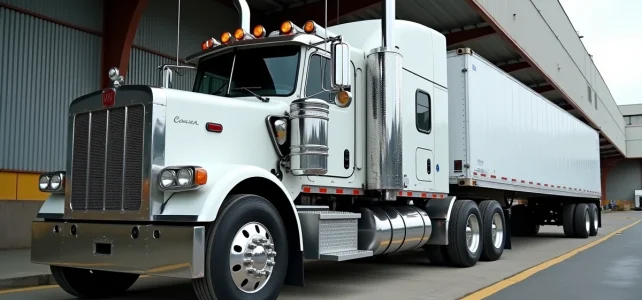
A 26-ton truck parked in front of a loading dock occupies the width of a lane by itself and often exceeds the height of a standard industrial gate. Knowing its exact dimensions means anticipating every constraint even before turning the ignition key. The dimensions of a 26-ton truck dictate the routes, loading capacity, and regulatory compliance of the transport.
Operational dimensions of the 26-ton truck: beyond just the GVW
When we talk about a 26-ton truck, we refer to its gross vehicle weight (GVW). This figure sets the maximum mass the vehicle can reach, including the driver, fuel, and goods. However, it says nothing about the available space inside the cargo area.
Understanding the dimensions of a 26-ton truck involves distinguishing three measurements: the external dimension (overall size of the vehicle on the road), the internal dimension (usable volume of the cargo area), and the overall dimension (including mirrors, unfolded tailgates, or folded cranes).
Why does this distinction matter? Because the same 26-ton truck equipped with a box body will not have the same footprint as a truck fitted with a handling crane. The bodywork modifies the actual dimensions of the vehicle, sometimes significantly. A folded liftgate adds several tens of centimeters in rear length, which changes the game for navigating a tight roundabout or maneuvering in a factory yard.

Height, width, and length of a 26-ton truck: regulatory limits
French regulations precisely govern the dimensions of heavy goods vehicles. The maximum allowed width is 2.55 meters, increased to 2.60 meters for refrigerated vehicles (the insulation of the walls justifies these additional centimeters).
On the height side, the general rule sets a ceiling at 4 meters. An exception exists for vehicles transporting ISO containers in national traffic: the height can then reach 4.20 meters. This detail has a direct impact on route choices, as many bridges and tunnels have limited dimensions.
The maximum length of a standalone vehicle (truck without a trailer) does not exceed 12 meters. A 26-ton truck typically ranges between 9 and 12 meters depending on the configuration of its cargo area and cabin.
Why these limits vary by bodywork
A tarpaulin-covered 26-ton truck, a closed van, and a flatbed crane do not occupy the same space down to the centimeter. The refrigerated box, with its thick walls, reduces the interior volume while consuming the allowed external width. Conversely, a flatbed maximizes the loading area but imposes different securing constraints.
Have you ever noticed that a refrigerated truck seems more imposing than a standard van of the same tonnage? It’s precisely because its insulating walls eat into the usable space while pushing the bodywork towards the maximum regulatory width.
Usable volume and number of axles: what determines the actual load
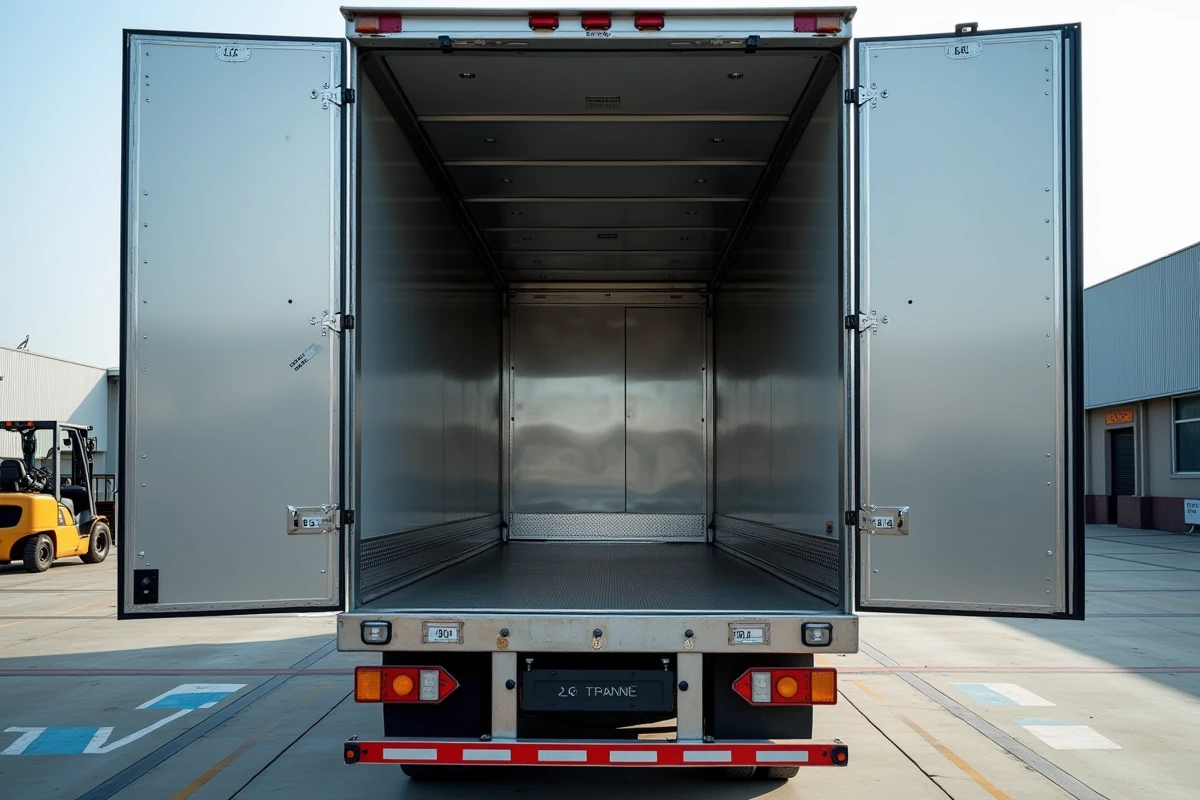
The interior volume of a 26-ton truck varies considerably. In standard van configuration, it provides a loading space that allows transporting pallets in several rows. The number of axles directly influences the load distribution and, consequently, the weight that each support point bears on the roadway.
A 26-ton truck most often runs on three axles. This configuration offers a good balance between load capacity and maneuverability. Two rear axles (one of which may be liftable) absorb most of the weight of the cargo, while the front axle ensures steering.
- 3-axle truck, van body: usable volume suitable for industrial deliveries and regional routes, with a good compromise between payload and urban footprint.
- 3-axle truck, flatbed crane: usable length reduced by the crane’s footprint, but autonomous handling capacity on site, without additional equipment.
- 3-axle truck, refrigerated body: interior volume slightly less than a dry van of the same external dimensions, due to the thickness of the insulating walls.
The payload (the difference between the GVW and the empty weight) therefore depends as much on the onboard equipment as on the displayed tonnage. A 26-ton truck with a crane weighs more when empty and carries less cargo than a bare truck of the same GVW.
Traffic constraints and dimensions: plan before driving
The dimensions of a 26-ton truck do not only raise loading questions. They also determine where and when this vehicle can circulate.
Time restrictions and dimensions
Heavy goods vehicles over 7.5 tons are subject to traffic bans on weekends and public holidays in France. A 26-ton truck fully falls into this category. For a transporter, this means that the actual operating window of the vehicle is shorter than that of a light utility vehicle, even though the loading volume is much greater.
Infrastructure and reduced dimensions
Some routes impose height restrictions (tunnels, old bridges) or width restrictions (medieval city centers, narrow delivery zones). A truck that brushes against 4 meters in height cannot pass everywhere. GPS applications dedicated to heavy goods vehicles incorporate these dimensional constraints to calculate compatible routes.
- Check the clearance under each structure along the planned route, especially in urban or old rural areas.
- Anticipate the necessary turning radius: an 11-meter truck does not maneuver like a 6-meter utility vehicle in a dead end.
- Consider deployed equipment (open tailgate, crane in working position) that temporarily increases the overall dimensions.
The technical inspection of heavy goods vehicles also checks for compliance with dimensions, verifying that the bodywork, safety equipment, and signage correspond to the declared dimensions of the vehicle. A discrepancy between the actual dimensions and the recorded dimensions can lead to a re-inspection.
Choosing a 26-ton truck means balancing usable volume, empty weight, and access constraints. The external dimensions set the regulatory limits, while the internal configuration determines what the vehicle can actually transport. Before each mission, the question remains the same: does the vehicle’s dimensions fit the planned route, from departure to the unloading dock?