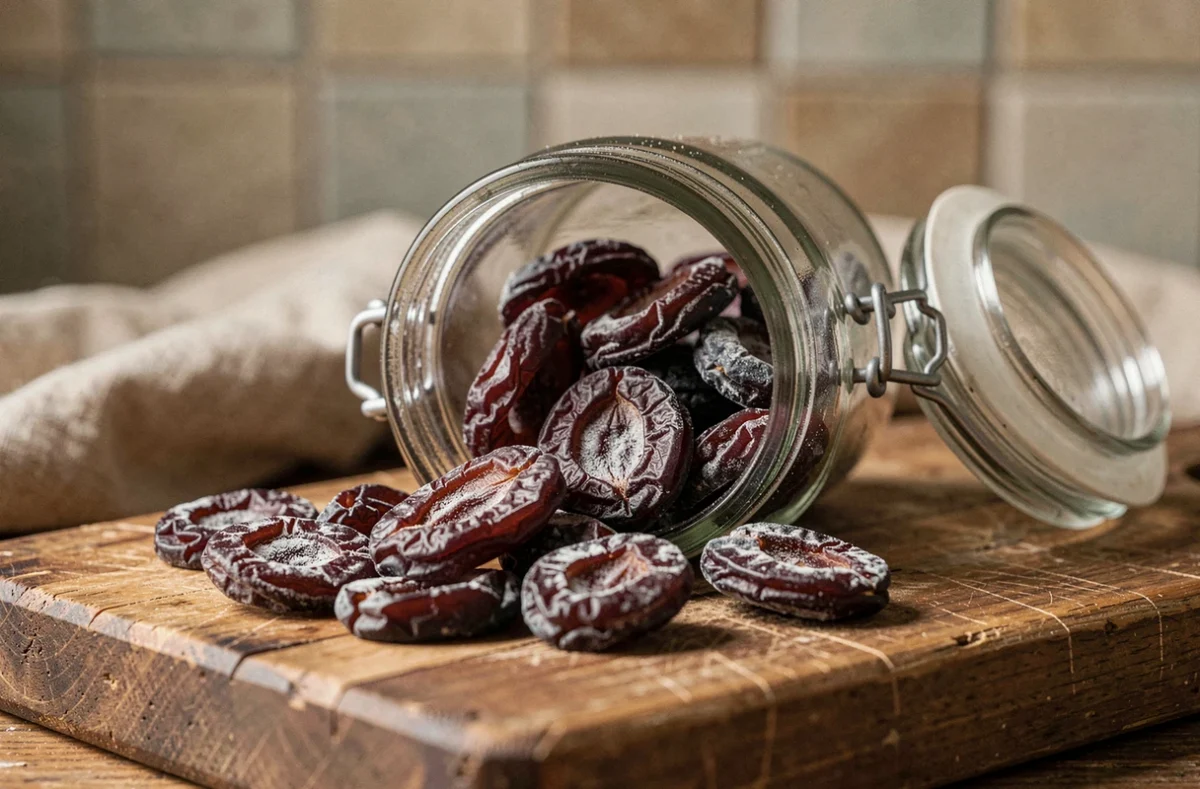
Prunes have a date label on their packaging, and this date almost always corresponds to a minimum durability date (MDD), recognizable by the phrase “best before”. Understanding what this label really means allows for an assessment of the actual risk associated with consuming a prune past its date.
MDD and BBD: two date labels with very different implications
French regulations distinguish between two types of dates on food products. The best before date (BBD) applies to highly perishable items: fresh meats, dairy products, refrigerated meals. Exceeding a BBD poses a real health risk.
The minimum durability date works differently. According to the DGCCRF, products whose MDD has passed can be consumed without risk, provided their packaging has not been altered. The product may have lost some of its taste qualities, but it is not considered dangerous by regulations.
Prunes, as dried fruits with low moisture content, fall under the MDD. Knowing if one can eat expired prunes thus comes down to whether the product has maintained an acceptable state despite surpassing this indicative date.
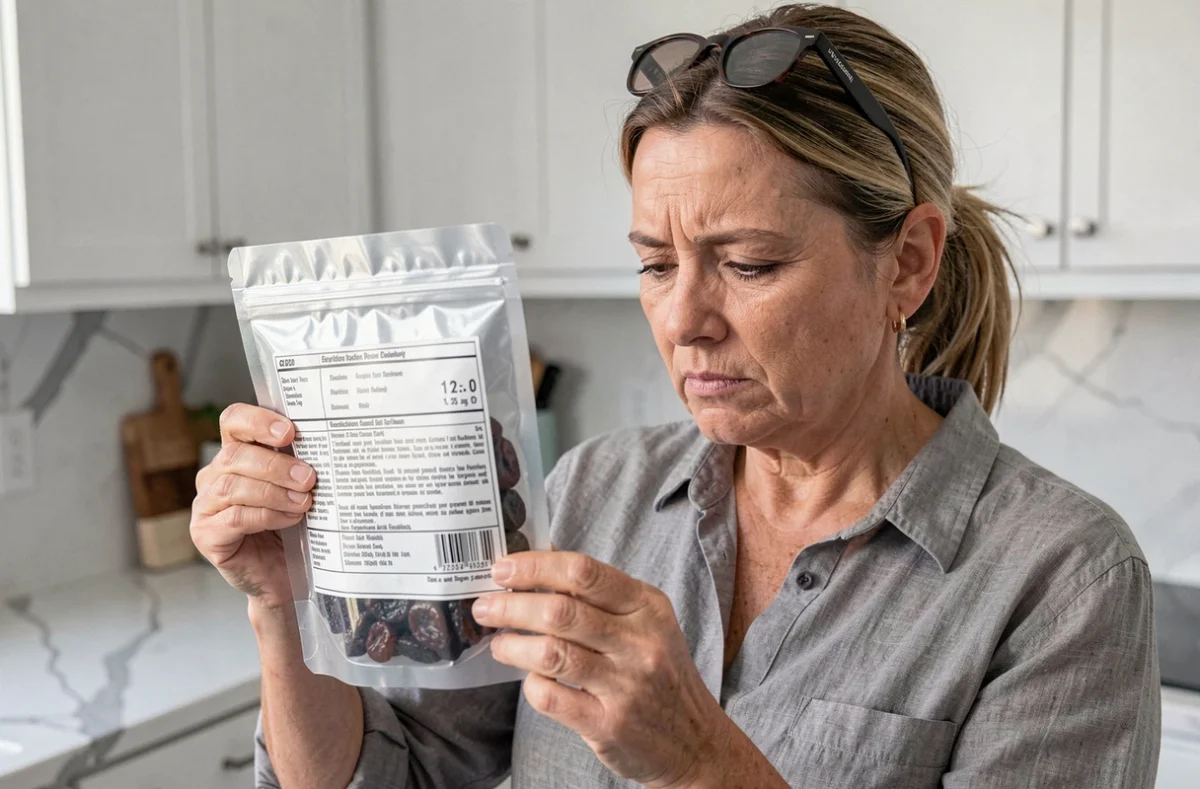
Expired prunes: the real risk factor is storage
The date printed on the bag provides a reference, but the storage history weighs more than the number on the label. A bag of prunes kept in a cool, dry cupboard generally remains consumable well beyond the MDD. The same bag forgotten in a cupboard above an oven tells a different story.
Temperature plays a measurable role. Recommendations from the National Center for Home Food Preservation, echoed by specialized sources, indicate that dried fruits last significantly longer in a cool place than in a warm environment. As a general guideline, the quality shelf life can be halved between temperate storage and high ambient temperature storage.
Humidity, a more insidious risk than the date
A poorly sealed bag after opening exposes prunes to ambient humidity. This reabsorption of moisture creates a favorable environment for mold, regardless of the date on the packaging. A prune with a still-valid MDD but that has been stored in an open bag in a humid kitchen presents more risks than a prune with an exceeded MDD kept in an airtight container.
The condition of the packaging takes precedence over the date: an intact bag, stored dry and away from heat, offers the best conditions for prolonged consumption.
White crystals or mold on prunes: knowing how to distinguish
A whitish deposit on the surface of a prune often triggers a reflex of distrust. This reaction is legitimate, but it is important to distinguish between two different phenomena.
Sugar crystals naturally migrate to the surface of the dried fruit over time. This crystalline deposit, slightly grainy to the touch, is not a sign of deterioration. It simply indicates the normal aging of the product and residual moisture evaporation.
Mold, on the other hand, appears as fuzzy spots, sometimes greenish or grayish, with a different texture. If mold appears, caution dictates that the entire batch should be discarded. Specialized sources advise against removing visibly affected pieces to consume the rest, as fungal filaments can spread invisibly.
Concrete signs to check before consuming
Before eating prunes past their date, a few simple checks can help rule out problematic cases:
- The smell should remain fruity and sweet. A sour, fermented, or rancid smell indicates deterioration that no cooking can correct.
- The normal texture of an aged prune is drier and firmer than that of a fresh prune, but it should not be sticky or show abnormal sweating.
- The packaging should show no swelling, perforations, or signs of moisture inside the bag.
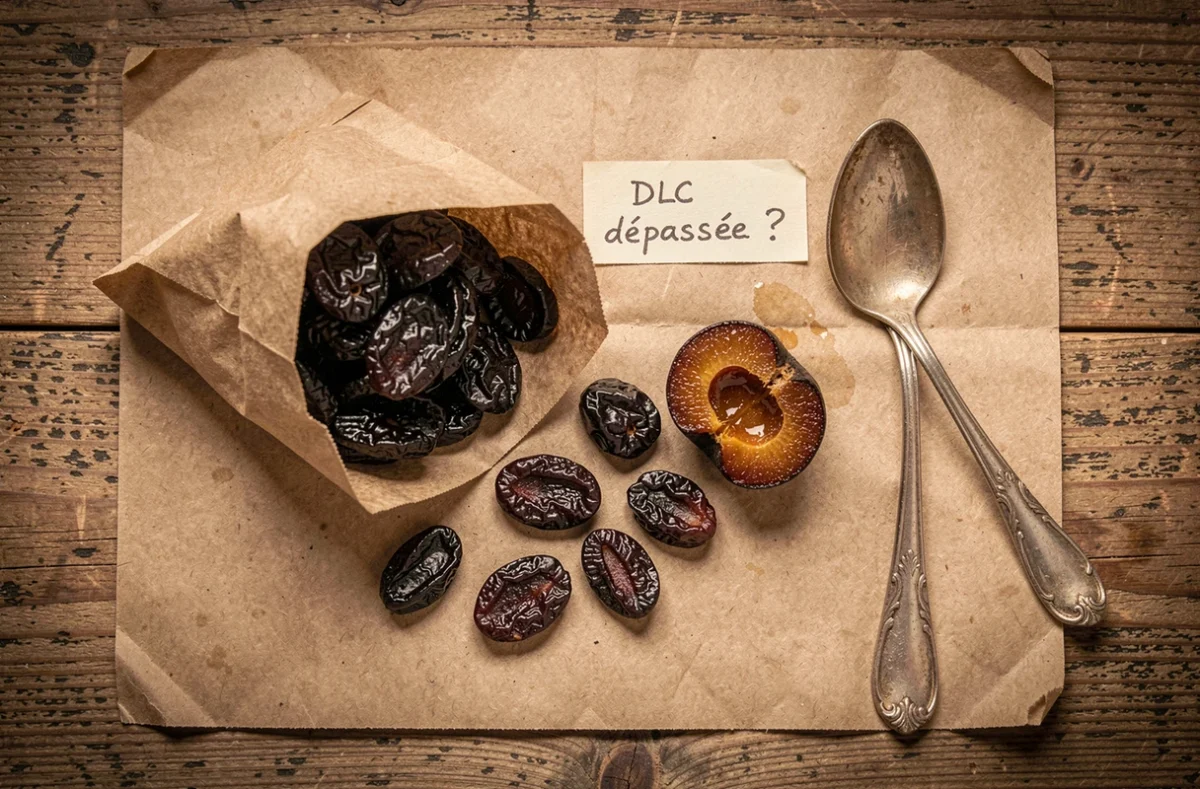
Long-term storage of prunes: the actions that make a difference
Rather than wondering how long after the MDD a prune remains edible, it is more useful to adopt practices that truly extend the product’s shelf life.
Transferring to an airtight glass or food-grade plastic container immediately after opening the bag significantly reduces exposure to moisture. Storing in a cool place (pantry, bottom of a cupboard away from heat sources) slows the degradation of organoleptic qualities.
The refrigerator is a valid option for storage for several months after opening. Prunes retain their softness and flavor longer there than at room temperature. Some even place them in the freezer for very long-term storage, although this practice slightly alters the texture after thawing.
- After opening, transfer to an airtight jar.
- Store away from light and direct heat sources.
- In the refrigerator, prunes maintain their sensory qualities well beyond the original MDD.
A prune with an exceeded MDD, kept in intact packaging and stored dry, does not pose a health risk in the regulatory sense. The risk arises from storage conditions, not from the calendar. The only reliable warning signals remain the smell, texture, and presence of visible mold. In case of doubt about any of these three points, it is better to err on the side of caution than to attempt to salvage the contents of the bag.