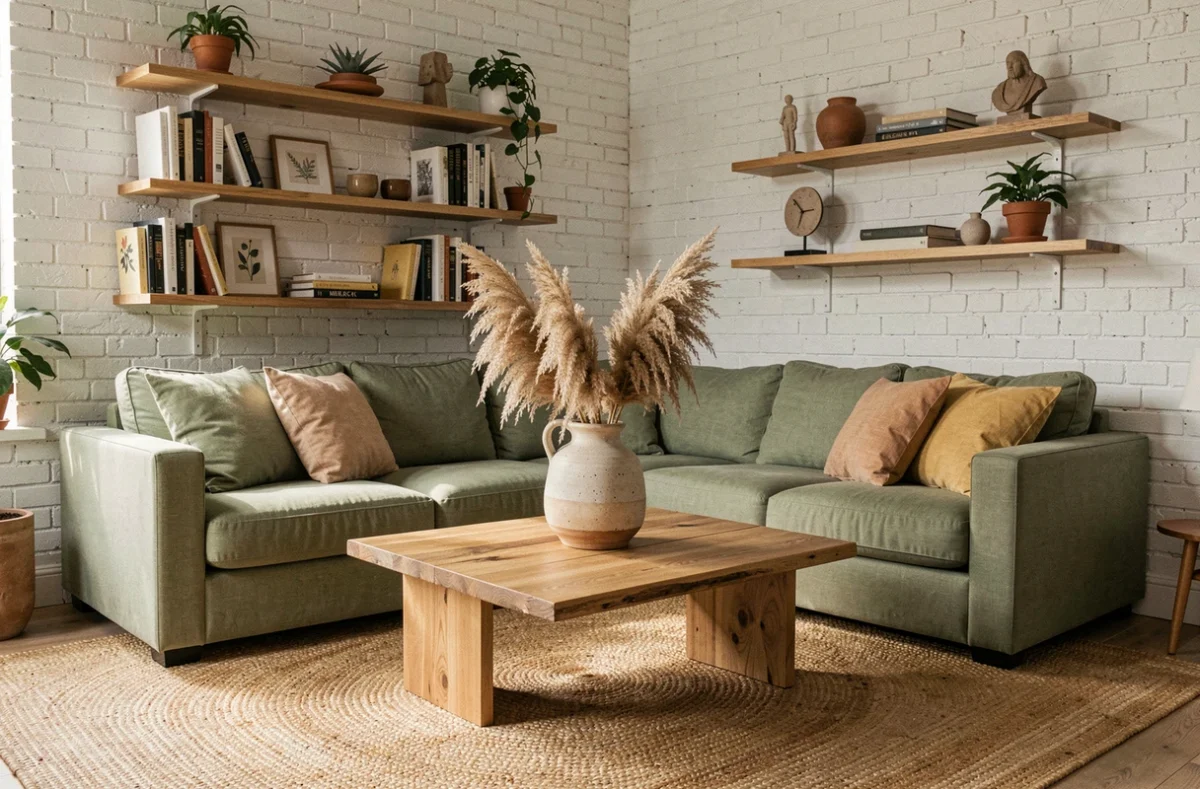
Enhancing an interior starts with making choices about materials, light, and proportions that work together in a given space. Each room has its constraints (orientation, volume, daily use), and it is from these constraints that a home is built that looks unlike any other.
Indoor Air Quality and Material Choices for Decoration
Before discussing colors or style, a technical parameter determines the comfort of an interior: air quality. Wood-derived panels, adhesives, and certain paints emit volatile organic compounds after installation. In a closed dressing room or poorly ventilated closet, these emissions linger longer due to a lack of air circulation.
Floor coverings and wall paints benefit from regulatory labeling that classifies emissions from A+ (very low) to C (high). However, not all furniture has an equivalent labeling system. Distinguishing the label of coverings from the information on furniture allows for more coherent choices, especially for a bedroom or a prolonged living space.
Specifically, during a renovation project, checking the health label of paints and floors, and then looking for available certifications for furniture (environmental labels, detailed product sheets) is a useful reflex. Regularly airing out rooms, especially in the first weeks after installation, complements this approach. To delve deeper into these issues and find additional resources on layout, the Perceptum home site gathers practical guides on the subject.
Reuse and Repurposing Furniture for a Unique Interior
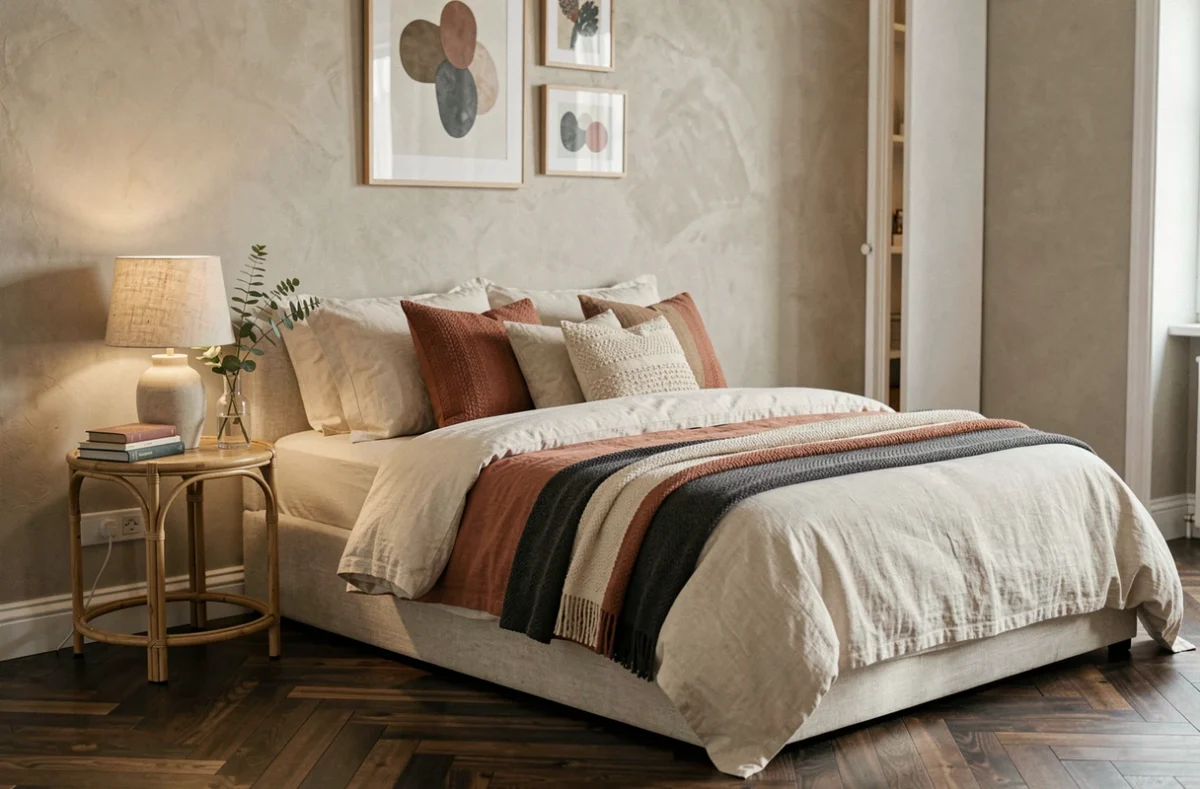
The reuse of furniture is not just an economical solution. It is a lever for decorative differentiation. A restored antique piece, an industrial object repurposed for storage, or a repainted dresser creates associations that standardized catalogs do not offer.
Combining Antique Pieces and Contemporary Furniture
The principle is simple: an existing piece of furniture, repaired or reworked, is combined with contemporary pieces to break the uniformity of an interior. A solid oak farmhouse table placed in a sleek kitchen creates a contrast of textures and eras that adds character to the room.
The mix of eras works when a common thread connects the pieces: a coherent color palette, a dominant material (wood, metal, ceramic), or a similar scale relationship. Without this thread, the accumulation of different styles turns into a mishmash.
The Regulatory Framework for Reuse
Since July 1, 2024, the purchasing obligations of the State and local authorities include objectives regarding goods from reuse, repurposing, or incorporating recycled materials. An individual is not subject to these obligations, but this evolution places reuse in a broader dynamic. Second-hand channels are becoming structured, and the supply of refurbished furniture is improving in quality.
Indoor Lighting: Layering Light Sources
A single central ceiling light is the most common configuration. It is also the least flattering. Successful lighting layers at least three types of sources: general lighting (ceiling light or pendant), functional lighting (desk lamp, worktop spotlight), and ambient lighting (table lamp, string lights, wall sconce).
Each source serves a specific role. General lighting ensures basic visibility. Functional lighting targets an activity area. Ambient lighting, the most neglected, alters the perception of volumes and creates shadow areas that add depth to the room.
Color Temperature and Use of Each Room
The color temperature of a bulb, expressed in kelvins, directly influences the atmosphere of a room. Warm tones (around 2,700 K) are suitable for rest areas: living room, bedroom. More neutral tones (3,500 to 4,000 K) are adapted to the kitchen or office, where visual precision is paramount.
Mixing two temperatures in the same room is possible, provided they are assigned to distinct functions. A neutral white pendant above a kitchen island, combined with warm white sconces along the wall, visually separates the preparation area from the dining area.
Colors and Proportions: Structuring a Space with a Limited Palette
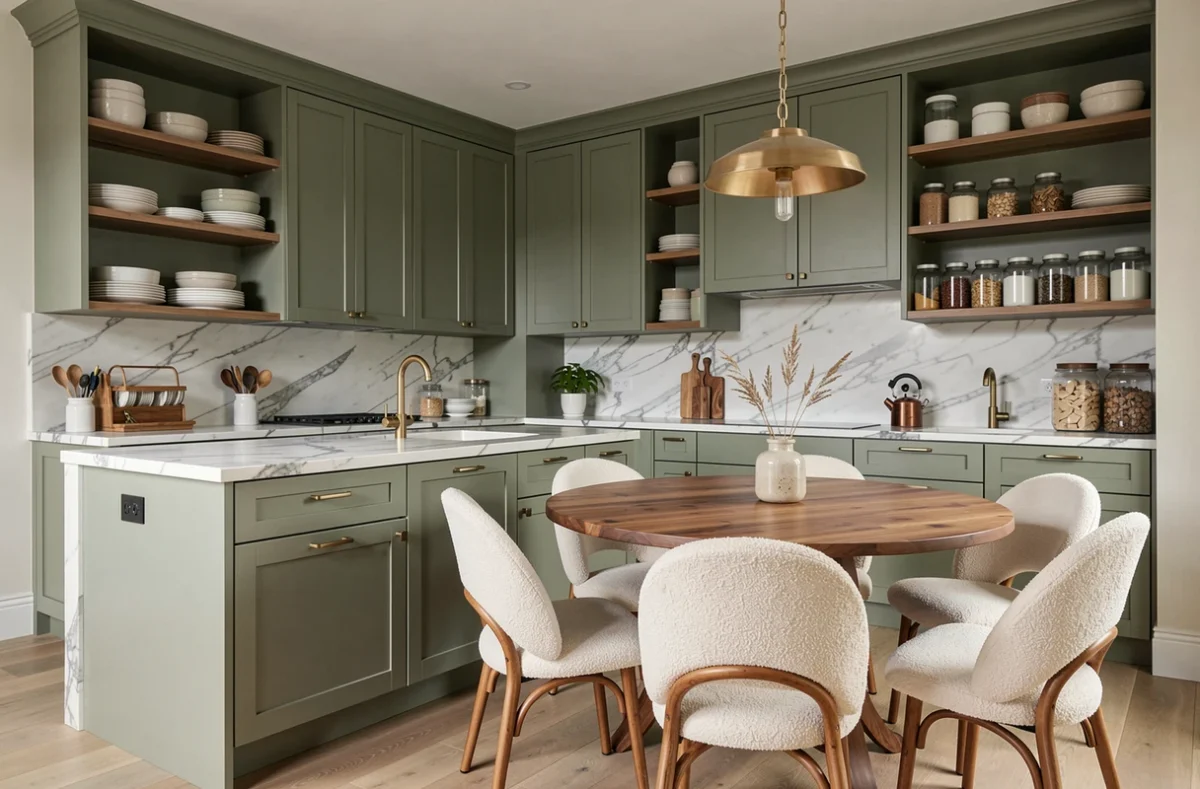
The temptation to multiply colors in a single room often results in a confusing outcome. A more reliable method is to limit the palette to a maximum of three colors per room: a dominant color (walls, floor), a secondary color (large furniture, curtains), and an accent color (cushions, decorative objects, frames).
The dominant color occupies the majority of the visible surface. The secondary color provides contrast without overwhelming the eye. The accent, used in small touches, draws attention to specific points and enlivens the whole.
Adapting Color to the Volume of the Room
A dark color visually brings walls closer. In a large room, this effect creates an enveloping sensation. In a small space, it compresses the perceived volume. Light shades, on the other hand, push the walls away and visually enlarge the space.
This principle also applies to the ceiling. A ceiling painted in a darker tone than the walls visually lowers the height, which can be desirable in a room with very high ceilings. In a standard apartment, it is better to keep a light ceiling to maintain the sense of volume.
- Saturated colors (teal, terracotta, forest green) work well as accent colors or on a single wall, but may become tiring if they cover the entire room.
- Neutral colors (beige, light gray, off-white) as the dominant allow for more freedom to change decor without repainting everything.
- Matte finishes absorb light and hide surface imperfections, while satin finishes reflect more and are suitable for humid rooms.
The interior of a house is built in successive layers: first the materials and the air they emit, then the light that reveals them, and finally the colors and objects that give them an identity. Each layer interacts with the others. A vintage piece of furniture takes on a whole new look under well-thought-out lighting, within a controlled color palette. It is this coherence between the layers that transforms a dwelling into a unique place.