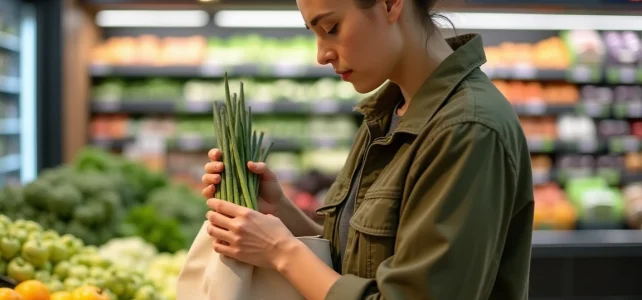
An anti-waste basket refers to a collection of food products that are close to their expiration date (DLC), sold at a reduced price to prevent them from being thrown away. At Lidl, this initiative takes the form of crates for 1 euro for fruits and vegetables, and more recently, trays of meat and fish for 0.50 euro in some stores.
Gradual markdown and flash clearance: the pricing mechanism for unsold items at Lidl
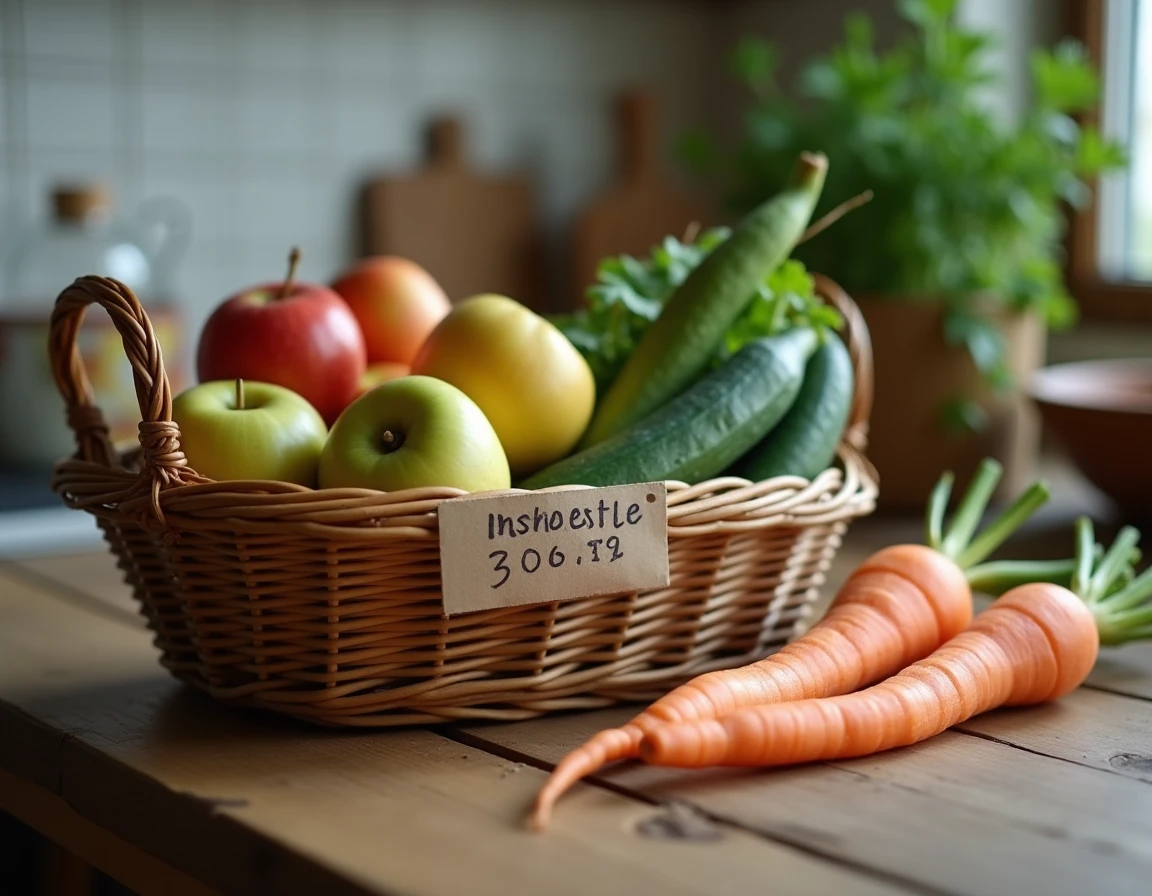
The principle is based on a system of successive markdowns applied to fresh products. An item approaching its DLC first undergoes a 30% discount, then 50%. If the product still hasn’t sold, it moves into the anti-waste basket at a fixed price.
This tiered logic distinguishes Lidl’s initiative from applications like Too Good To Go or Phenix, which operate on a surprise basket model ordered in advance. Here, the consumer sees exactly what they are buying, in the aisle, without a digital intermediary.
For meat and fish products, the last tier sets the price at 0.50 euro per tray on the last day of DLC. This “flash clearance” mechanism turns logistical constraints into a commercial argument: the product must be consumed the same day or within the following hours.
It should be understood that Lidl’s anti-waste baskets are not considered food donations, but rather a sale with almost no margin that remains profitable by avoiding the cost of destroying unsold items.
Lidl anti-waste time slot: why shop between 6 PM and 7 PM
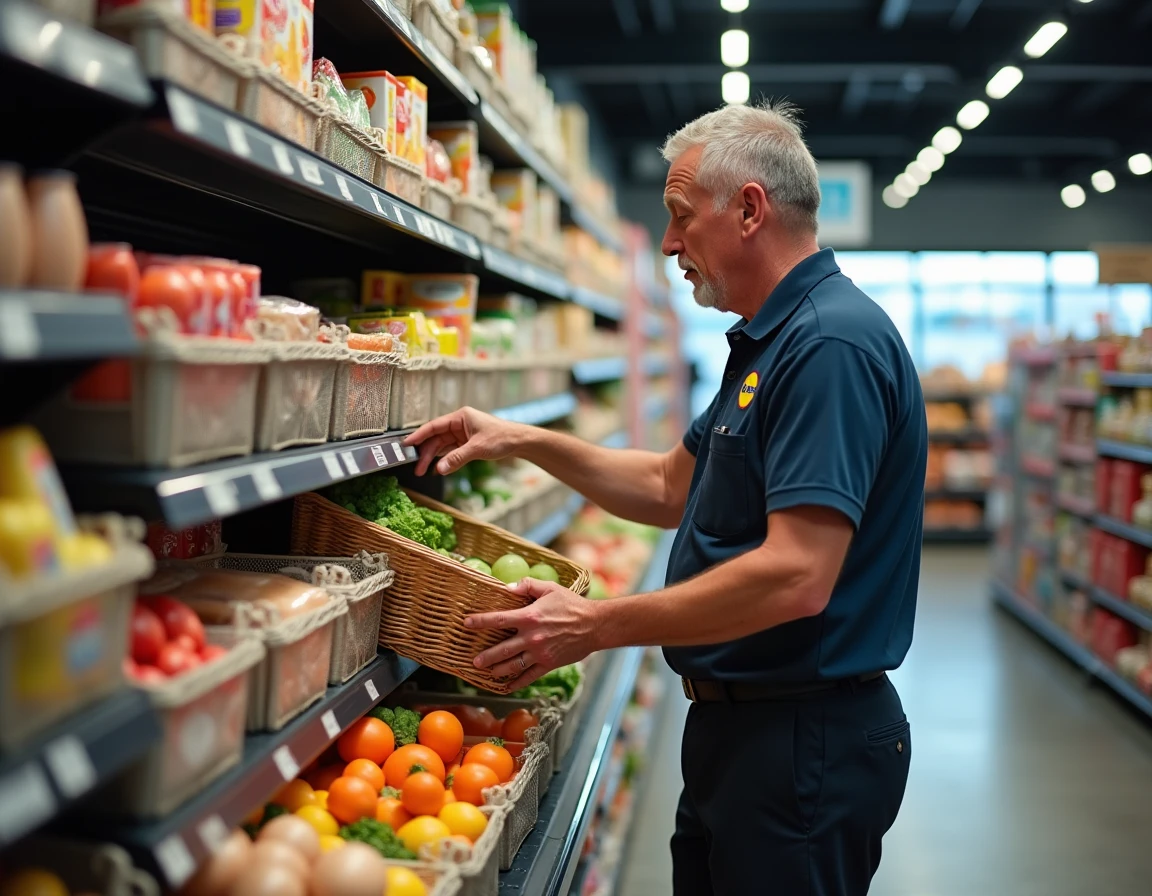
One of the least documented aspects by institutional content concerns timing. The best anti-waste deals are not available all day. A time slot between 6 PM and 7 PM concentrates most of the trays at 0.50 euro and the fullest crates.
This time slot is explained by the internal workings of the stores. A freshness manager checks the quality of products every day. Items removed from the regular shelves in the late afternoon directly feed into the anti-waste bin. Before 5 PM, the selection remains slim. After 7 PM, regular customers have already made their purchases.
This time window has created a new behavior among some consumers, who organize their shopping around the anti-waste time slot. Content creators on social media document their Lidl “hauls” at the end of the day, helping to normalize this practice.
What the 1 euro crates actually contain
The crates of fruits and vegetables group products that are still consumable but have visual defects or are overripe. They often include:
- Fruits to be consumed within 24 to 48 hours (spotted bananas, slightly damaged apples, soft citrus fruits)
- “Ugly” vegetables perfectly usable in soups, gratins, or stir-fries (twisted carrots, dented zucchinis, very ripe tomatoes)
- Herbs or salads close to their expiration date, still fresh but less presentable
The contents vary from store to store and from day to day. There is no guarantee on the composition, which distinguishes this model from surprise baskets from third-party applications where a minimum value amount is announced.
Meat and fish at 0.50 euro: conditions and limits of the initiative
The extension to animal proteins represents a notable change. The trays concerned have a DLC expiring on the same day. The product must be consumed or frozen very quickly after purchase.
This time constraint raises a practical question: a consumer who buys three trays of chicken for 0.50 euro at the end of the day must have a freezer or plan to cook immediately. The financial gain only makes sense if the product is actually consumed.
Not all Lidl stores yet offer this price for meat and fish. The rollout remains gradual, and availability depends on the volume of fresh unsold items at each point of sale. An urban store with high traffic will mechanically have less surplus than a suburban store.
Lidl anti-waste baskets in Europe: varying prices and formats
The initiative is not limited to France. In Belgium, Lidl launched the “Bon Appétit Zéro Gaspi” program with similar mechanisms for gradual reduction. In Switzerland, baskets are offered at 5 CHF, with more varied assortments including canned goods and dry products alongside fresh fruits and vegetables.
These variations show that the format of the anti-waste basket adapts to local purchasing power and consumption habits. The principle remains the same: to sell products close to their expiration date rather than destroy them.
What differentiates Lidl from anti-waste applications
The comparison with Too Good To Go or Phenix deserves to be made based on concrete criteria:
- At Lidl, no reservation or app to download. Purchase is made directly in-store, without service fees
- The contents of the basket are visible before purchase, whereas the surprise baskets from applications do not reveal their composition
- The fixed price (1 euro for crates, 0.50 euro for meat) is lower than most Too Good To Go baskets, which are generally charged around 3 to 4 euros
- In return, the applications cover a wider range of businesses (bakeries, restaurants, gourmet shops), while Lidl limits itself to its own aisles
The choice between the two depends on the shopping profile. A consumer specifically looking for fresh products at minimal prices will find more value in Lidl’s initiative. A user who appreciates variety and the element of surprise will turn to the applications.
Lidl’s approach is based on a logic of volume and operational simplicity. No matching algorithm, no pickup time slot to reserve. The product is on the shelf, labeled, accessible. This lack of friction partly explains why the initiative attracts a clientele that would never have signed up for an application dedicated to food waste.