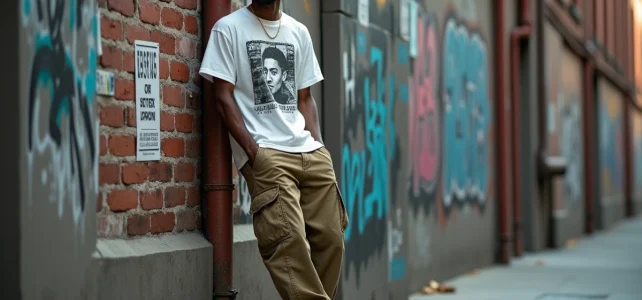
A large t-shirt, high-top sneakers, a cap firmly on the head. This wardrobe, worn by millions of people every day, does not come from a haute couture workshop. It comes from the street, literally. Streetwear was built in the working-class neighborhoods of America in the 1970s-1980s, at the crossroads of skateboarding, hip-hop, and California surfing. Understanding its origins is key to understanding why this style still dominates current fashion.
The technical fabric before the logo: the forgotten foundation of streetwear
The history of streetwear begins before logos and icons. It starts with the garment itself and its material. The first skateboarders in Southern California chose their clothes for practical reasons. Pants had to withstand falls on the pavement. A sweatshirt had to absorb sweat without hindering movement.
Thick cotton, reinforced denim, and vulcanized rubber soles formed the foundation of this wardrobe. These textiles came from sports and workwear, not fashion. Streetwear culture inherited this functional logic, and it has never fully abandoned it.
As detailed in the history of streetwear according to Klottra, this utilitarian dimension preceded the aesthetic dimension. Style came after use. This is what distinguishes streetwear from most fashion trends, where the visual takes precedence over function.
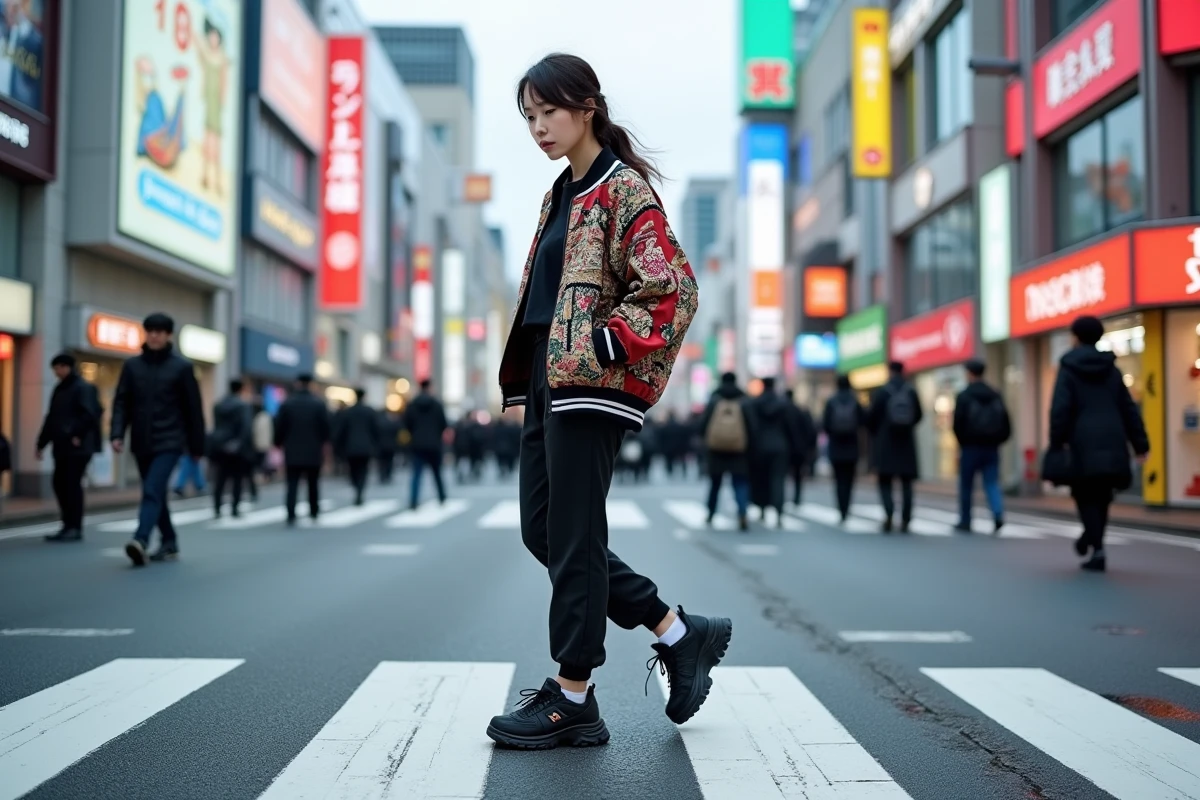
Hip-hop and skate: two cultures, one shared rejection of dress codes
Have you ever noticed that streetwear looks nothing like any other fashion movement? That’s because it wasn’t born in a design studio. It emerged from two communities that had nothing to do with each other but shared a common rejection of conventional clothing.
The Bronx and the East Coast
In the neighborhoods of the Bronx and Harlem, the emerging hip-hop transformed clothing into a marker of identity. Tracksuits, large chains, and athletic shoes were not fashion choices. They were choices of social class, reclaimed and valued by a youth who had no access to haute couture circuits.
Sportswear became an act of cultural assertion, not just an aesthetic choice. Rappers wore sports brands because they were accessible, visible, and recognizable on the street.
California and the West Coast
On the other side of the country, skateboarders and surfers were building their own dress code. Screen-printed t-shirts, baggy shorts, flat shoes with sticky soles. Here, clothing responded to a physical constraint: slide, fall, start over.
The meeting of these two worlds in the 1980s produced a hybrid style. Streetwear is the intersection of functional sportswear and urban musical culture. No designer decided on this fusion. It happened organically, in the street.
Streetwear and brands: when the street creates its own labels
The uniqueness of streetwear is that its iconic brands were not founded by fashion professionals. Shawn Stussy sold surfboards before putting his logo on t-shirts. James Jebbia opened the first Supreme store in New York in the mid-1990s with a limited stock and a minimalist display.
This model, based on scarcity and limited distribution (the famous “drops”), has defined the streetwear economy for decades. A few characteristics distinguish these brands from classic fashion houses:
- Deliberately limited production: each piece becomes rare, thus desirable, without massive advertising campaigns
- Direct distribution, often from a single physical store or their own website, without going through department stores
- Strong graphics: logos, typography, artistic collaborations that transform a basic garment into a collectible item
This system has created a resale market where certain pieces sell for well above their original price. Artificial scarcity remains a powerful commercial lever, even though it shows signs of fatigue. The proliferation of drops has eventually saturated the market, and part of the audience is turning away from it.
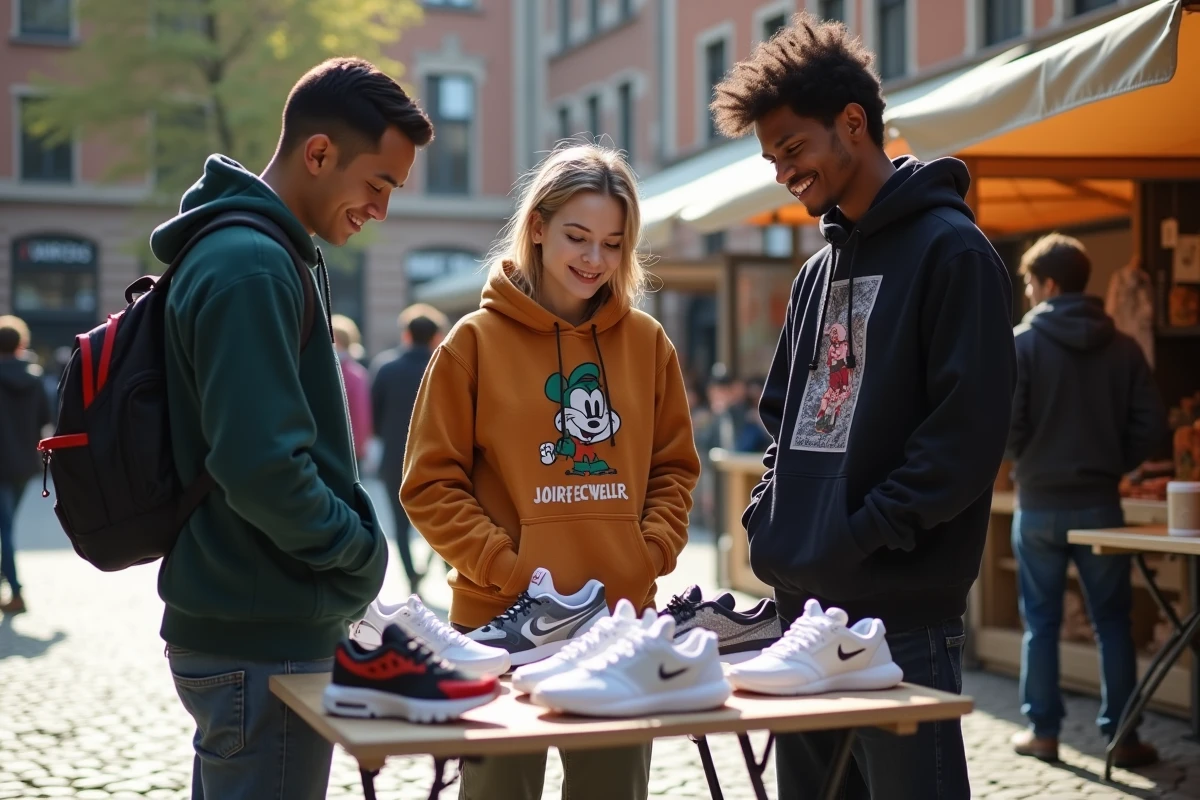
Luxury collaborations and streetwear: a boundary that has disappeared
The most visible shift occurred when haute couture houses began recruiting designers from streetwear. The appointment of Virgil Abloh as artistic director of the men’s line at Louis Vuitton marked a symbolic turning point. A designer trained by the culture of the screen-printed t-shirt was taking the reins of a house founded in the 19th century.
These collaborations between luxury brands and streetwear labels have blurred the categories. A hoodie can cost as much as a tailored coat. A tracksuit bears the signature of a Parisian fashion house. The boundary between streetwear and luxury clothing no longer exists in practice.
This fusion has also triggered a counter-movement. In recent years, part of the market has turned away from flashy logos and oversized silhouettes. “Quiet luxury,” focused on discreet cuts and technical materials, is gaining ground. Streetwear is evolving towards more sobriety and functionality, as a return to its utilitarian origins.
Streetwear today: street style or global uniform
The paradox of streetwear can be summed up in one sentence: a movement born against dress norms has become the norm. Sneakers, sweatshirts, and graphic t-shirts make up the daily wardrobe of a majority of the population, far beyond skate or hip-hop enthusiasts.
Some recent trends are reshaping the landscape:
- The rise of functional clothing and athleisure, which integrates technical textiles into urban pieces
- The growing criticism of artificial scarcity, seen as manipulative by some consumers
- The influence of social media, which accelerates trend cycles and makes each style ephemeral
Streetwear is no longer a fashion trend; it is the foundation of contemporary wardrobe. Its codes, materials, and economy of scarcity have transformed the textile industry as a whole. The next evolution is likely to be on the side of technical materials and sustainable clothing, far from logos and queues outside stores.