
Most films and blinds sold to block the view from outside work by relying on a difference in brightness between the two sides of the glass. This simple physical principle has a direct consequence: their effectiveness changes depending on the time of day.
In the evening, when the lights are on indoors, a one-way mirror film can let people see inside from the street. Understanding how this works helps you choose the right solution for your situation, without undertaking major renovations.
One-way mirror film in the evening: why privacy is reversed
One-way mirror film reflects light from the brighter side. During the day, sunlight hits the façade: passers-by see their reflection, not your interior. The film works as intended.
At night, the balance is reversed. When the lights are on indoors, the mirror effect shifts to the room side: you see your reflection in the glass, while people outside can see inside. This reversal is not a manufacturing defect; it is an optical property inherent to the product.
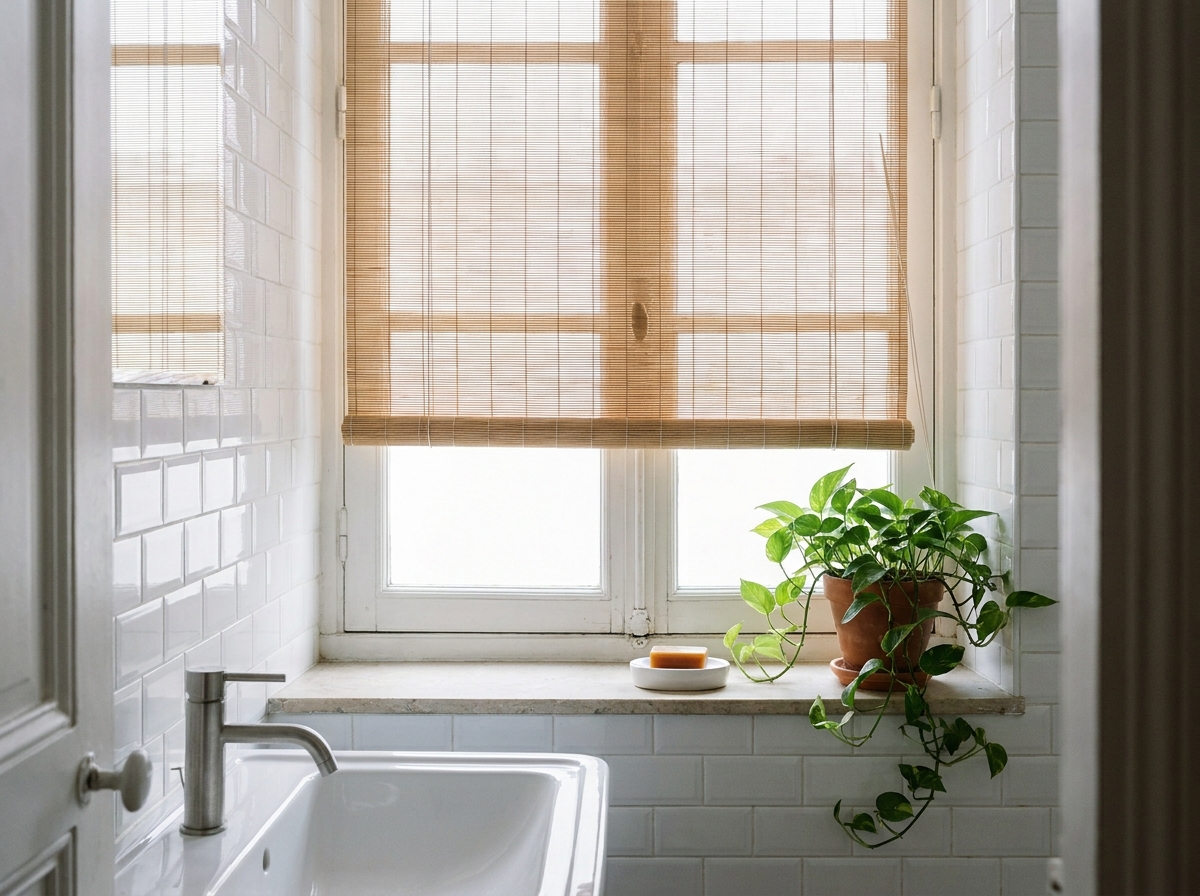
For continuous privacy, day and night, one-way mirror film alone is not enough. You need to pair it with a curtain, sheer curtain or blind that you close at dusk. This is rarely highlighted on product pages, which almost always show photos taken in broad daylight.
Installing a store interieur without drilling is an easy way to make up for this limitation in just a few minutes, without touching the window frame or wall.
Frosted or mirror window film: two different approaches to privacy
Frosted and mirror films meet opposing needs. Confusing the two can lead to disappointment.
Frosted film: constant privacy, but no view
Frosted film blurs the view in both directions, day and night. No one can see through it, including you. It is a suitable option for a bathroom, a ground-floor room opening directly onto a pavement, or a glazed panel above an entrance door.
Frosted film also blocks the view from inside to outside, making it unsuitable if you want to keep your view or enjoy unfiltered natural light. Light still gets through, but it is diffused: the feel of the room changes and contrasts soften.
Mirror film: keeps the view during the day, but needs a covering at night
Mirror film preserves your view outside during the day. You can look out as usual, while passers-by see only their reflection. It is particularly useful for a living room or bedroom with a moderate degree of overlooking.
Its main drawback is the nighttime reversal described above. Mirror film works as a daytime supplement, not as a standalone solution.
Film and double-glazing compatibility: check before installation
One technical detail deserves attention before you buy adhesive film: not all films are compatible with all types of glazing. Applying an unsuitable film to sun-exposed double glazing can cause thermal stress. The inner pane absorbs more heat, and the temperature difference between the filmed area and the frame creates mechanical stress. In some cases, the glass can crack.
Check that the film is suitable for your type of glazing before installation. This precaution is recommended by manufacturers and specialist retailers such as Lapeyre. Coated glazing (low-emissivity or solar-control) is particularly affected.
This precaution is rarely mentioned in quick online guides, which tend to focus on how easy the film is to install. If you are unsure what type of glazing you have, check the marking on the spacer bar visible along the edge of the double-glazed unit, between the two panes.
Adhesive-free static-cling films: an option for renters
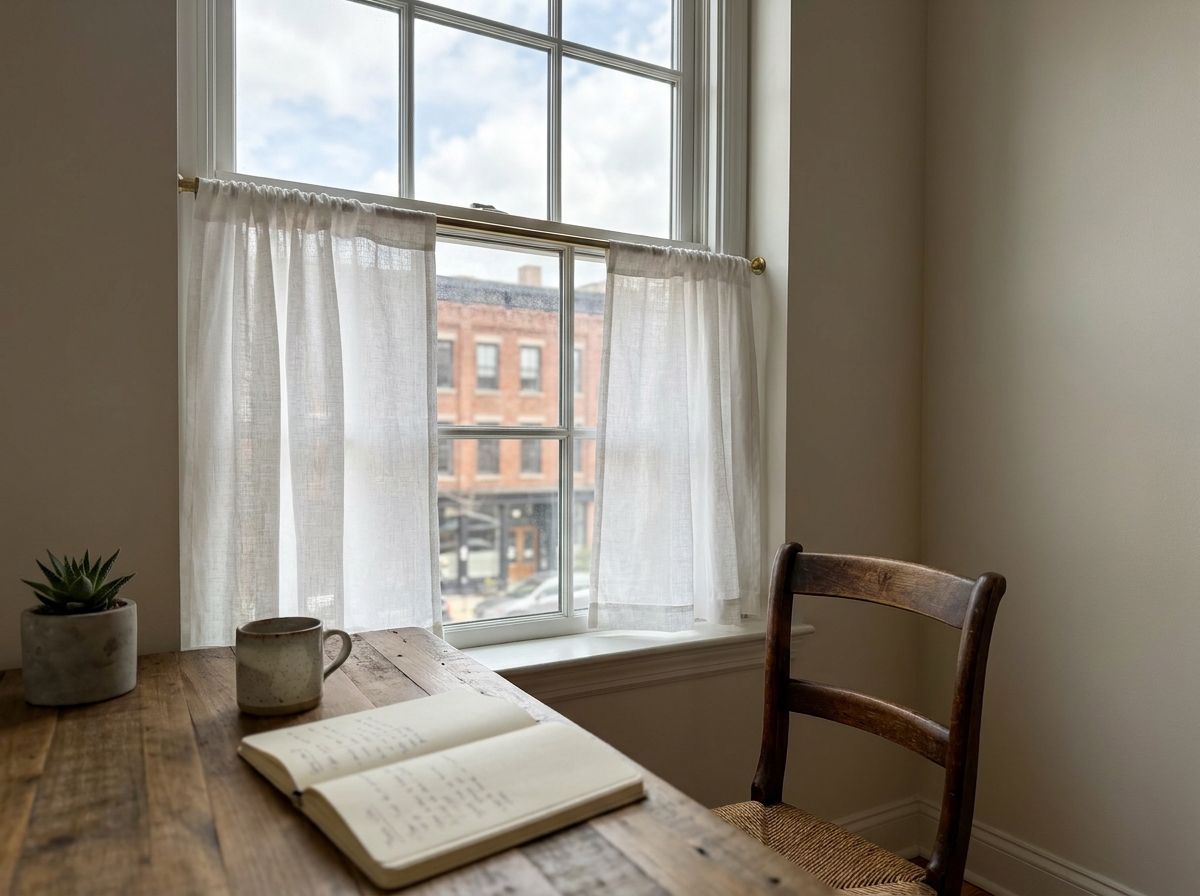
Static-cling films attach to the glass without glue or adhesive. They can be peeled off by hand and, depending on the model, repositioned several times.
This feature is especially useful for renters. There is no residue on the glass when you move out, and the surface remains unaltered. You can take the film with you if you move.
- Frosted models mimic the look of sandblasted glass and are suitable for bathrooms or ground-floor windows, providing constant privacy day and night.
- Models with geometric or botanical patterns add a decorative touch while partially obscuring the view, depending on the density of the chosen pattern.
- Transparent, ribbed models let light through while diffracting it, creating prismatic reflections without completely blocking the view.
Adhesion and reusability vary from model to model. A low-quality film may peel away at the corners after a few weeks, especially in a humid room. Testing it on a small area before covering the whole window is the most reliable way to see how well it holds up in your actual conditions.
Combining blinds and film: the most complete privacy solution
No single solution works in every situation. Mirror film provides privacy during the day, but not at night. Frosted film provides privacy day and night, but blocks the view. A blackout blind blocks both the view and the light when closed.
For a living space overlooked by neighbours, the most balanced combination is mirror film on the glass and an interior blind to lower in the evening. During the day, you can enjoy the view and natural light while shielding your home from outside eyes. In the evening, the blind takes over.
- Mirror film plus a roller blind: suitable for large living-room windows; the blind can be lowered in seconds with no complicated adjustments.
- Partial frosted film (on the lower part of the window) with the upper part left clear: a good compromise for a ground-floor home office, letting light in from above while ensuring privacy at eye level.
- Static-cling film plus a sheer curtain: a reversible solution for a rented home, with no drilling and no marks.
The choice depends on three factors: the window’s orientation, the degree of overlooking and whether you rent or own. A south-facing window with a direct view from neighbouring properties calls for a different solution than a north-facing window on an upper floor. Matching the solution to your actual setup helps you avoid investing in a product that only solves half the problem.
All these solutions can be installed in under an hour, with no specialist tools or alterations to the building. The glass remains intact, the frame is not drilled, and everything can be removed if you change your mind or move home.