
Finding an activity for your child close to home often starts with an online search. You get a list of places ranked by distance. The problem is that a map doesn’t tell you how long the journey actually takes, what it costs, or whether the venue can accommodate a child with additional needs. Finding the best activities and resources for children near you means checking much more than their location.
What makes a children’s activity truly accessible: transport, cost and support for additional needs
A workshop listed as two kilometres away may take thirty minutes to reach by public transport, including a bus change. For a parent without a car, that activity isn’t really “nearby.”
Before signing up, it’s worth checking three things in practice.
- The actual journey, not the straight-line distance: use a public transport or walking route planner. A venue on the other side of a railway line or ring road can double the journey time
- The total cost of taking part: the advertised price may not include required equipment, annual membership fees or a snack. Some municipal facilities use a family income-based pricing scale, while others do not
- Support for children with disabilities or additional needs: ask whether staff are trained, whether the premises are accessible and whether accommodations are available. An activity that is “open to everyone” on paper may not be in practice
These checks take just a few minutes by phone or email. They can prevent disappointment on the day.
Activities for children: local resources that national platforms don’t show
Major family activity platforms mainly list venues that pay to appear or actively manage their listings. Many local resources go unnoticed.
Financial assistance varies from one department to another. Your local Caf website and the departmental council’s website often list schemes that don’t appear on national sites. A discount voucher for a leisure centre or specific support for single-parent families may be available locally without being advertised elsewhere.
Municipal community centres offer creative, sports and cultural workshops for children, often at reduced rates. Your town hall’s website (under “youth” or “community centres”) is the most reliable place to find them. Specialist directories such as annuairedesenfants.net also list venues by location, making it easier to start your search.
Municipal media libraries and public libraries regularly organise story times, digital workshops and film screenings. These events are free in most cases, but rarely show up in standard search engines. Check your local media library’s monthly programme directly.
Regulatory compliance at leisure centres: something to check before signing up
You’ve found a leisure centre with an appealing programme and opening hours that fit your family’s schedule. Before completing the registration, there’s one thing worth checking: whether the centre complies with regulations.
A leisure centre (formerly known as a “holiday centre”) must meet specific legal requirements. These cover staff-to-child ratios, staff qualifications and the safety of the premises. This regulatory framework is designed to ensure children are in a suitable environment.
How to check in practice
The Departmental Directorate for Social Cohesion (or its equivalent in your department) issues operating permits. You can ask whether a centre is registered and compliant.
A registered centre isn’t necessarily one that has been inspected recently. Registration is an initial requirement. Inspections depend on the resources available to departmental services. It’s worth asking the centre directly when it was last inspected.
Another indicator is the educational project. Every group childcare facility for minors must have one. Ask to see it. If there isn’t one or the centre is reluctant to share it, that’s a warning sign.

Pass Culture for teenagers: a search tool for nearby activities
Pass Culture is often seen as a fund for buying books or concert tickets. It also works as a tool for finding nearby cultural activities.
Eligible teenagers can use the app to filter cultural activities by location. Writing workshops, drama classes and museum visits: the results take the user’s location into account.
This feature is underused. Many families use the app only to book cinema tickets or order books. Exploring the “nearby” and “workshops” filters can reveal options parents may not have known about.
Family outings: looking beyond the limits of digital tools
Digital tools make it easier to find activities, but they don’t address inequalities in access to cultural and leisure opportunities. In some rural areas and outlying neighbourhoods, the problem isn’t finding information—it’s that there are no activities available in the first place.
Local associations sometimes fill the gap. A volunteer-run sports club, a parent-and-child workshop organised by a neighbourhood association or a nature outing led by an informal group: these initiatives don’t appear in any search engine.
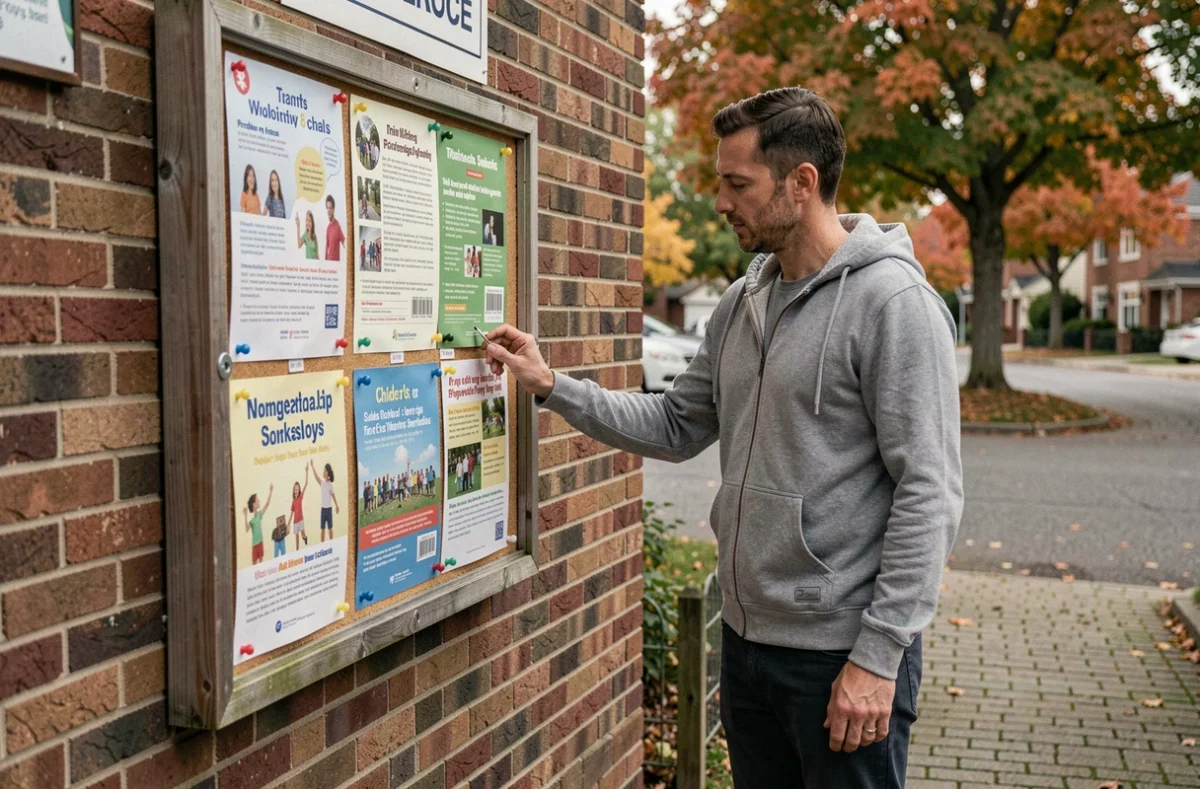
Word of mouth is still a powerful way to find them. Local parent groups on social media, school noticeboards and municipal newsletters are useful sources.
A regular, accessible activity is better than an occasional outing far away. A child who attends a workshop ten minutes from home every week gets more out of it than a child taken once a term to a large leisure park an hour’s drive away. The measure of a good activity for children is whether it fits into family life without creating a disproportionate logistical burden.