
Your turtle just bit its terrarium companion, and you don’t understand this sudden aggression. This behavior, far from being rare, is linked to specific mechanisms related to cohabitation, the environment, or the animal’s life cycle. Identifying the causes of biting allows you to act before injuries worsen.
Stress Related to Terrarium Setup: The Underestimated Trigger
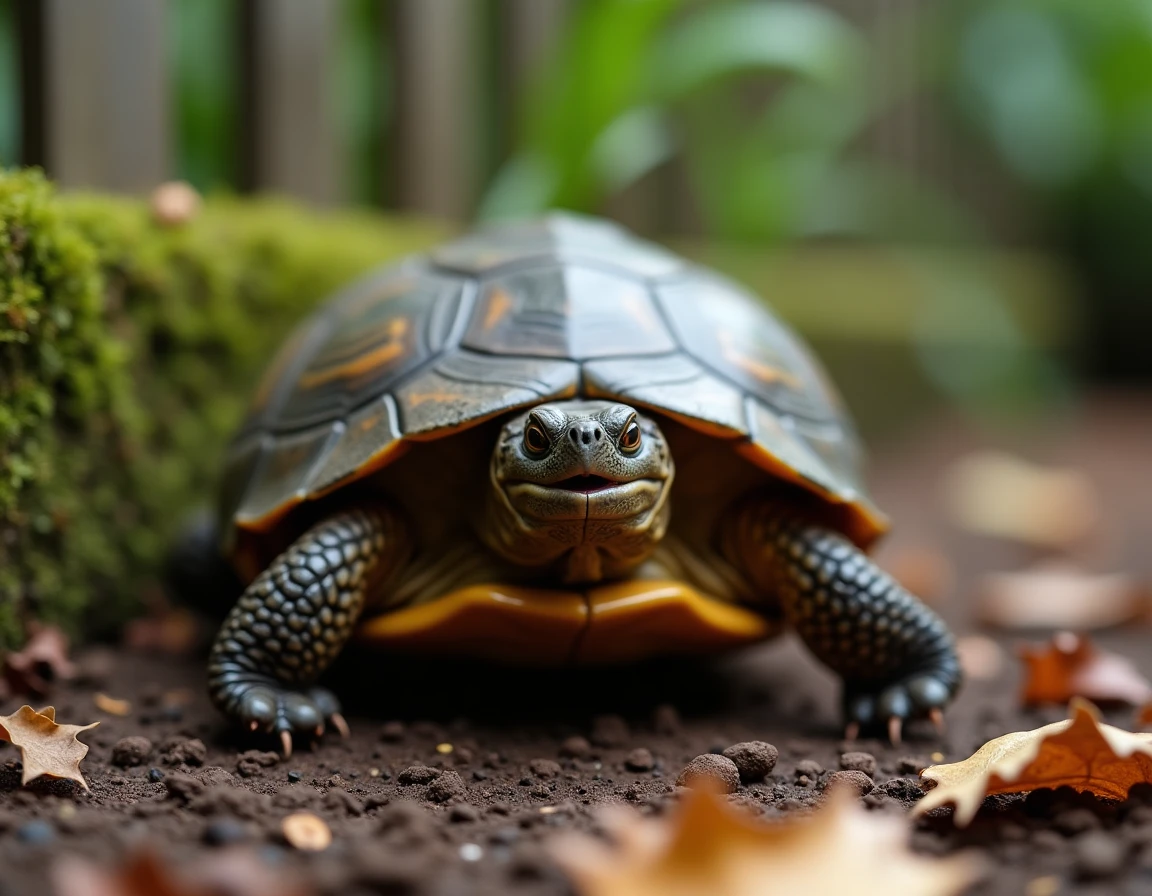
Have you ever observed your turtles looping in a corner of the tank, never exploring the rest? This behavior often indicates an impoverished environment. An empty space, without hiding spots, without relief, without distinct areas, generates chronic stress that turns into aggression.
Specifically, a turtle that has nowhere to escape the other’s gaze eventually perceives it as a constant threat. The lack of hiding spots multiplies direct confrontations. Two turtles in a bare tank constantly cross paths, with no possibility of fleeing or retreating.
A functional setup requires several distinct elements: at least two separate shelters, an accessible water point without competition, visual obstacles (rocks, plants, wood) that divide the space into micro-zones. When each turtle can retreat out of sight of the other, aggressive interactions notably decrease.
The size of the terrarium also plays a direct role. A space that is too small compresses territories and triggers competition. If your two turtles consistently find themselves in the same spot to eat, bask, or drink, biting becomes a reflex of resource defense, not an act of malice.
Turtle Biting During Breeding Season: Dominance and Sexual Approach

Behavior changes radically when the breeding cycle activates. A male during mating season pursues the female, biting her legs, neck, and sometimes shell. This is not aggression in the classical sense, but a typical sexual approach behavior of the species. To better understand the causes of turtle biting, it is essential to distinguish this reproductive approach from true aggression.
In Hermann’s tortoises, for example, the male bites the female to immobilize her before mating. This sequence may seem violent, but it is part of the normal reproductive repertoire. The problem arises when the male relentlessly repeats these attempts, exhausting or injuring the female.
Among males, rivalry takes another form. Two males in the same enclosure push, topple, and bite each other’s limbs. These dominance fights aim to establish a hierarchy. In the wild, the loser moves away. In captivity, it cannot flee, and the bites intensify.
- A single male with several females reduces the pressure on each individual, as he spreads his attempts to approach.
- Two males together without a female still fight due to pure territorial competition.
- A constantly harassed female develops visible stress: refusal to eat, prolonged withdrawal into hiding, lesions on the limbs.
If bites occur in spring or early summer, the reproductive angle is the first to explore.
Health Issues and Pain: When the Turtle Bites Due to Discomfort
A sick or suffering turtle can become aggressive towards its peers. This aspect is rarely addressed in forums, but feedback from breeders links the occurrence of bites to skin infections, mycoses, or irritations related to inappropriate humidity levels.
A suffering turtle bites to avoid any physical contact. It does not distinguish the intention of the other animal. Any proximity triggers a defensive reaction.
Several signals should alert you alongside the bites:
- Whitish or soft patches on the shell, possible signs of mycosis.
- Swelling of the eyes or nasal discharge, indicating a respiratory infection.
- A sudden change in appetite, often linked to digestive or thermal discomfort.
If a turtle that never bit before starts to attack, first check its health status before modifying the setup. A visit to a veterinarian specialized in reptiles can rule out a medical cause.
Cohabitation Between Land Turtles: Mistakes That Favor Biting
Cohabitation between turtles is not a given. Two individuals that have lived together for years can suddenly come into conflict. A change in relative size (one growing faster), a relocation of enclosures, or the addition of a third individual is enough to disrupt a fragile balance.
Mixing different species in the same enclosure increases the risks of biting. Each species has its own social codes, thermal needs, and feeding rhythms. A Florida turtle and a Hermann’s turtle have neither the same signals nor the same tolerance thresholds.
Separation sometimes remains the only sustainable solution. Installing a visual barrier in the terrarium, or using two distinct enclosures with alternating outings, allows both animals to be maintained without risk of injury. This decision is not a failure: some turtles are simply not compatible for permanent cohabitation.
Bites between turtles always respond to a logic: territory, reproduction, pain, or incompatibility. Observing the precise context of each incident (time of day, proximity to a resource, season) provides the key to identifying the triggering factor and adapting the environment accordingly.